Let's Talk Training: Jodi Kellar on Cross-Training Agility and Rally
Discover the benefits for both handlers and dogs.
 Jodi Kellar is a longtime competitor, dog trainer and rally judge for USDAA’s World Cynosport® Rally Limited (WCRL). She trains in New Jersey’s Monmouth and Ocean counties and plays at local and national competitions with her Beagle, OBX, and two Border Collies, Fun! and Sundae.
Jodi began competing in agility with her Beagle, Jellybean, and Labrador Retriever, Casey, in 2009, then started rally in 2010. She has since raised and competed with seven of her dogs, plus a few fosters.
Jodi finds that competing in multiple sports challenges her and her dogs in different ways. This cross-training (which she defined as the action or practice of engaging in two or more sports or types of exercise to improve fitness or performance in one’s main sport) has many mental and physical benefits.
"I really needed to listen to each of my dogs and examine our training along the way to make the best choices for us,” she said. “It’s interesting that for some dogs, the agility equipment was more helpful than rally to build a working relationship, while other dogs needed to get into the ring without that equipment. Perhaps the equipment provides a visual cue for some that instills confidence, whereas other dogs are overexcited by it,” Jodi said.
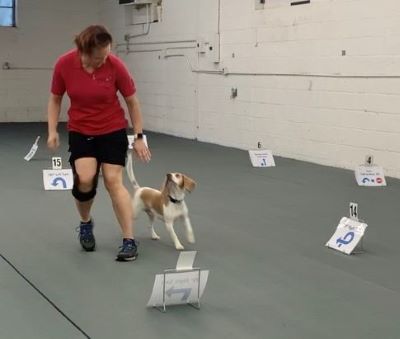 “Both sports require and therefore constantly challenge the communication, bond and teamwork between dogs and handlers. From the dog’s perspective, body cues are clearer and more meaningful in both sports, which makes them both valuable in creating depth as a team. Both sports are also filled with people and dogs having fun together because it strengthens our skills while guiding us to new challenges.”
She explained that rally training builds a strong foundation for handler focus, creating a working relationship that can be applied in life and in other sports. In contrast, agility balances handler focus with obstacles and helps dogs understand that working farther away from their handler is still a good thing. Both sports also help to build a dog’s body awareness.
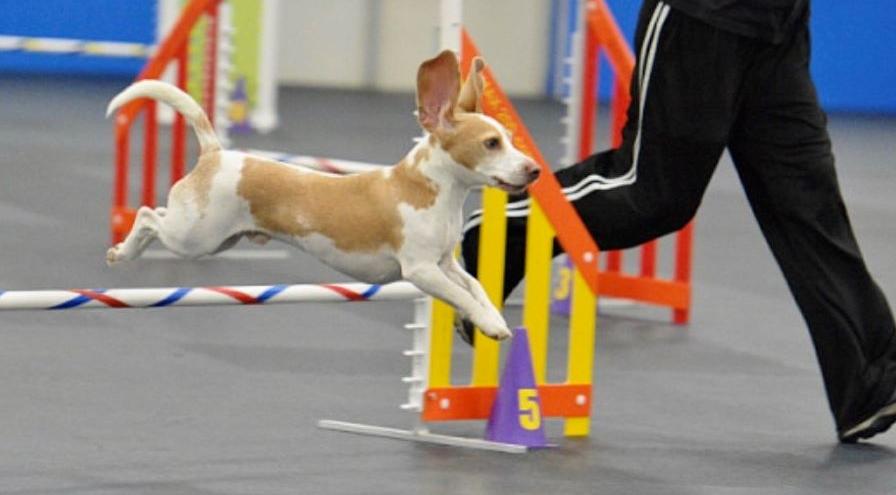 “There are many skills that apply to both sports and participating in both creates a different challenge for the same skill, just as there are various ways to execute a jump for the dog and various ways to ask the dog to go over the jump,” Jodi said. She added that this versatility has another benefit, creating another outlet for a team to play together if they can no longer compete in a particular sport.
“Once you have a working competition relationship with your dog, they need stimulation, even as they get older, develop a handicap, or their sport is not available to them for other reasons,” she said. “Each handler needs to honestly consider their dogs’ needs and how they enjoy playing together and reevaluate this as they grow and change as a team.”
Updated from February 2020 Q&A with Jodi Kellar