Baby Steps: Get to Know Your Puppy and Create a Good Training Foundation
An interview with Julie Daniels
Adapted/condensed from the Fenzi Dog Sports Academy (FDSA) podcast; published here with permission.
Getting a new puppy is an exciting time in any dog lover’s life. What are some goals the owner can work on when the puppy is young? What traits and skills will help the puppy develop into a happy, healthy, successful family member? Trainer Julie Daniels (JD) of Deerfield, N.H., recently joined FDSA’s Melissa Breau (MB) to discuss these questions and more on the Fenzi Dog Sports Podcast.
Five important skills to get started
MB: To start us off, when you get a new puppy, what are your goals for the first few weeks together? 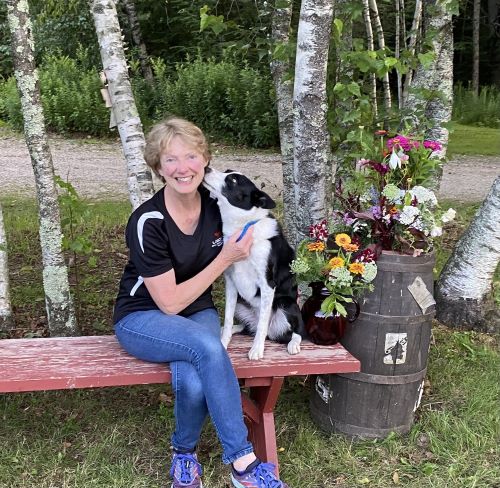
JD: That’s such an important question because the first few weeks are different from any long-term goals. We all tend to do things with our hopes in mind, but hopefully we don’t have any hard-and-fast rules about what this puppy must grow up to be. I find most people are more flexible with what the puppy wants to be when it grows up, and I think that’s the right thing to do.
I have a short list of five little skill sets that I think are important to get started as soon as possible. Within the first three weeks, it’s really important to establish a potty routine. Potty is a life skill, right? So even the youngest puppies should be able to pee on or off leash, at or away from home, and even on cue. I also think it’s important to start right away with relationship things. It’s so wonderful to see people just bonding with their dogs, which obviously you can do later in life, but the sooner the better!
I also want to work on a reinforcement skillset, meaning what food, toys, affection, or play we use in training. And the socialization skillset is important to think about, even with everyone’s wildly divergent opinions about how much and when and with whom and where.
The other skillset I work on with puppies is the restraint skill. Of course, that means crates and pens and the like, but it really applies to any kind of barrier. We tend to overlook the importance of handling and hand restraint. It’s incredibly easy to teach a youngster compared to an older adolescent or adult, at least because they’re tinier and weigh less. You have to follow the dog’s choice in how you approach it, but there are very simple games to create a fun approach to teaching handheld restraint.
Getting to know your new puppy or dog
MB: Can you talk a little bit about what you’re watching for when getting to know your new puppy or dog? Are there specific behaviors you’re trying to observe and make a note of what they tell you?
JD: I love to watch puppies. I’m always looking to see who the individual is. Puppies are never really blank slates, even if we tend to think of them that way. The younger a puppy is, we have so much more moldability, but I want to know who they are without any intervention. Are they an optimist, meaning are they attracted to or avoidant of novelty?
Their optimism is so important! In the experience of novelty, an optimist expects a positive experience. And that’s what I’m looking for in the puppy. In fact, it could possibly be the center of it all. We want to build attraction instead of avoidance, so you need a whole lot of little things that are nonfamiliar and maybe out of place. A puppy might be pessimistic and not very confident, which will show up very, very soon.
No matter which one they are, I want to develop that curiosity factor. If I’m just watching the puppy play and I see an element of frustration, I’m not going to rescue them. It’s a fun little experiment to see what they’re going to do next – how creative, resourceful, confident and even resilient they might be. There are so many little traits and emotions I want to observe to make note of who the puppy is and what things we might need to work on.
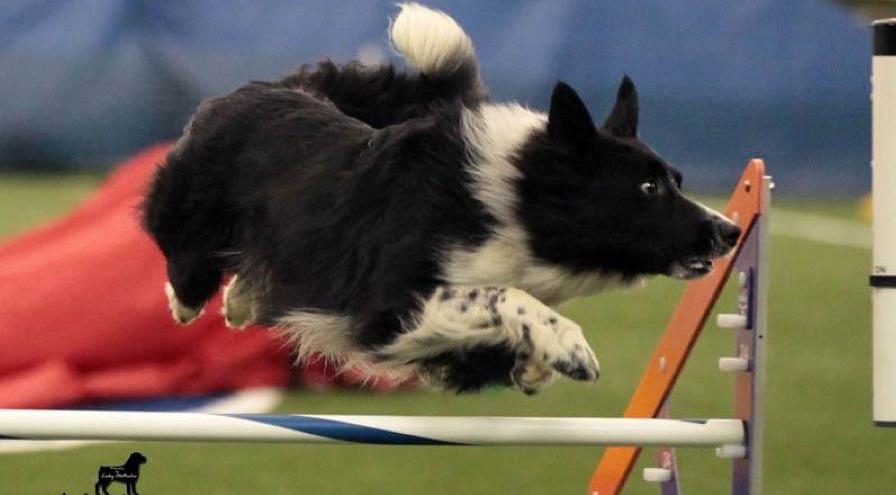 We all bring home a puppy who has some things that are too much this way for our liking and some that are too much the other way, and in training, we’d like to bring them to the middle. So if you get to know who they are as a baseline over the first few weeks, you’ll be able to develop a plan for shaping toward the direction you ultimately want to be.
Waiting until they're older
MB: Is there anything you’d intentionally wait to teach until the puppies are a bit older?
JD: Certainly there’s a lot with more challenging impulse control that we need to wait for, but let me put my finger on one that comes up all the time: a proper tuck sit. So many babies do not have the quad strength to hold a proper tuck sit. Don’t teach that early, because you’re going to build it incorrectly. You’re going to build it as a pelvis sit, and that’s not what you want your puppy to default to.
I won’t teach a formal sit behavior until my puppy’s strong enough to hold it. Sit is a natural behavior and your dog is going to do it, but you should let your puppy do it in their own way. As they get stronger, you’ll see the ability and strength developing over time.
To listen to the full episode, check out the FDSA Podcast here, and be sure to check out Julie’s upcoming classes.
About Julie Daniels
Julie goes into greater depth with her training methods at her own Kool Kids Agility (Deerfield, N.H.) and online with FDSA, hosting popular classes such as Baby Genius (for puppies 3-6 months of age), Adolescent Minds and Manners (6-18 months of age), and Cookie Jar Games. She is a Certified Control Unleashed Instructor, often working with sport puppies and reactive dogs of all ages, and has competed, titled and won in agility with all sorts of dogs throughout her life. She is also a positive voice for cancer “thrivers” worldwide, having been a Stage 4 breast cancer patient for over seven years. Her Patreon page includes a dog training tier, with all funds going toward her ongoing immunotherapy treatments in Germany.