Meet Cynosport-bound Lilo, a Deaf Rescue Turned Agility Dog
Running an atypical dog with optimism, patience and love
Puppy fever
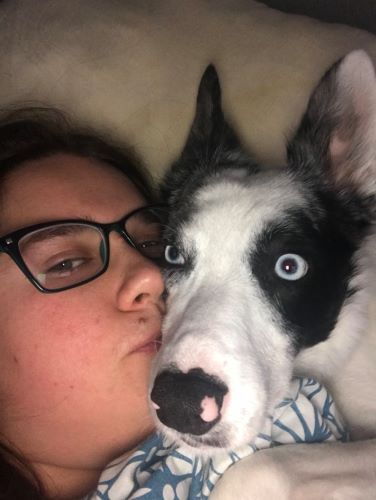 When puppy fever hit hard in the summer of 2019, Karen Danielle of Gilbert, Ariz., saw her opportunity to get a new dog and return to the agility world. She first started competing in 2005 with a Rat Terrier named Minnie when she was just 14 years old and Minnie was 6, but she stopped competing for several years around the start of her college career. Although she never expected to own a Border Collie, she found herself looking into the Arizona Border Collie Rescue to see what was available.
Karen started going to meet adoptable Border Collies, but she hadn’t found her match. She almost missed meeting a 10-week-old puppy that fit her specifications because of a 70-minute drive in rush hour traffic and a lack of sleep. However, when she arrived, the puppy was quickly forgotten when a stunning blue-eyed blue merle claimed her immediately.
“The rescue’s management explained that the dog I was cuddling up with had spent the first three days of her life at the rescue trying to bite anyone who came near her, was impossible to catch once loose, and was waiting on a specialty foster home that would pick her up the next day,” Karen said. “Oh. And she was deaf.”
Karen knew that wasn’t the dog she had bargained for, especially as a future agility dog. When she stepped outside to call her roommate for advice, there was the blue-eyed dog pushing the curtains down to watch her from the window. Karen became her foster mother that morning on a whim.
“We walked out of that rescue together, and she fell asleep next to me on the ride home,” Karen said. “I named her Lilo, which is Hawaiian for ‘lost,’ thinking we could be lost together if nothing else. She turned 4 years old this year and is a solid one-person dog who has blossomed into a gorgeous agility dog. She’s also an excellent mind reader on and off course.”
Training the atypical dog
With Lilo and her new one-eyed sister, Moody, who joined the family in April 2021, Karen knows that optimism is vital for training all dogs, especially when faced with a challenge. Finding a support system that is open-minded to the situation and a trainer or group that can help in getting creative will go a long way, but a lot of atypical training requires patience and optimism.
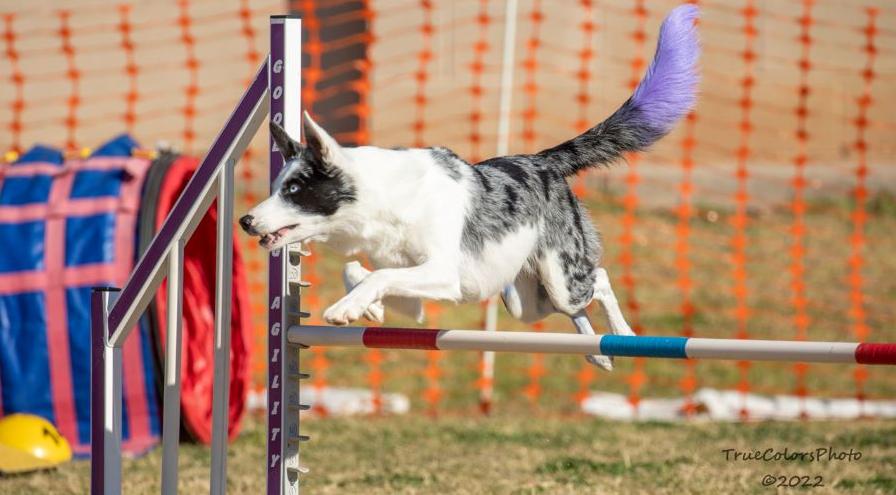 “Celebrate the tiny victories,” Karen said. “There’s so much hope in those little moments. And don’t forget to have patience with your dog; they’re also learning how to handle this from a different perspective.”
With Lilo’s deafness, Karen had to develop a marker sign for “yes/good,” the start line release, tunnels, dog walks, A-frames and teeters. Because most of a dog’s confidence in the ring comes from the handler’s ability to praise as you go, training Lilo’s focus was vital to their competitive career.
“I often call it 'games of blinds' because Lilo gains confidence from running with me, and I have to find places to signal lead and direction changes without forcing her to turn around and find me,” Karen said. “We do a lot of creative handling with attention on continuous visual support while I gain distance in front of her. We also trained her to sit for leashing after her run because there’s no verbal recall; I hop and throw my hands up in the air to signal we’re done, and she quickly sits for leashing.”
Karen trains at Desert Paws Agility (Queen Creek, Ariz.) and Good Dog Agility Club (Phoenix, Ariz.), and she owes both for her and Lilo’s growth in the ring. “Lori Pacini and Marya Brackney are the brain trust behind my handling system and a constant source of innovative support,” she said.
Choosing the road less traveled
Lilo is the senior competitor in Karen’s family, while 18-month-old Moody has only started showing recently. “They make a funny pair,” Karen remarked. “The ‘hear no evil, see no evil’ jokes just write themselves.” She added that the most important thing about owning an atypical dog is loving them unconditionally as they love you. Remember that every time you go to practice or step into the competition ring, choosing the road less traveled and often more arduous road makes you and your dog brave.
“Our dogs are capable and intelligent far beyond what we know,” Karen said. “Your dog is listening even when you don’t say anything, and they hear you with far more than their ears. I used to get caught up in the thought that I could never fully express how much I love Lilo since she’d never heard me say it. I know now that she never needs to; she gets to feel it instead. Your different dog sees you trying for them, and I promise you, they know.”