Celebrate Improvement - Not Just Qs
In this fast-paced world, do we take the time to celebrate the wins that don’t come with a blue ribbon?
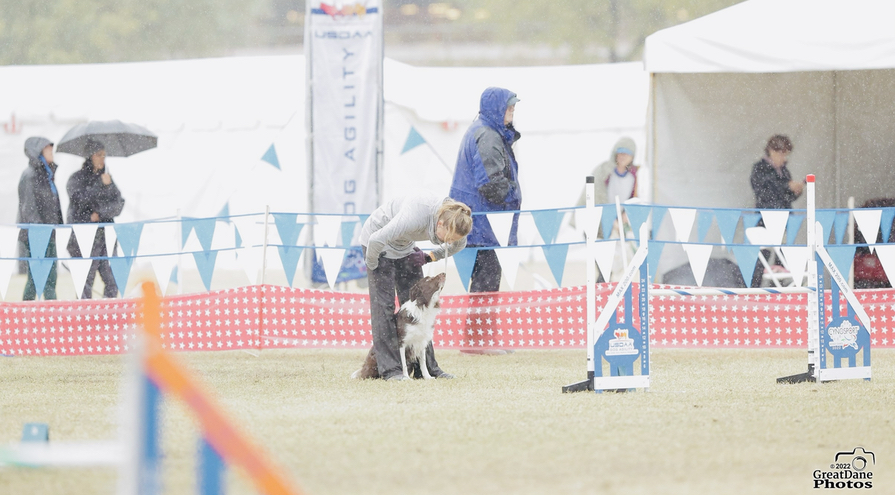
Some of my favorite runs have been non-qualifying runs. The ones where something clicked, where progress showed up in a way that matters far beyond a Q.
If we step to the line thinking about what can go right instead of what might go wrong, everything changes. The mental game plays a huge role, for both us and our dogs. It’s about setting the picture for success before we ever take the first step.
Progress over perfection is always the goal in agility.
But what does progress actually look like?
- Sometimes it’s handling a tough sequence in a challenging environment.
- Sometimes it’s holding a start line.
- Sometimes it’s confidence where there used to be hesitation.
We hear it all the time: “I just need one more Q… one more for Nationals… one more for ADCH.”
But zoom out.
Sometimes the real win is getting through the start line. Or executing one difficult section exactly how you planned it. Those are the moments that build the bigger picture.
Celebrate those.
Especially with our young dogs, setting a solid foundation in the sport is everything. Instead of chasing the Q, chase success in your relationship. Focus on clear communication, confidence, and growth with your teammate. The results will come, but the partnership you build along the way is what truly matters.
Every one of my dogs, and myself, have had moments, sometimes many, where we needed more clarity, both in practice and in the trial environment.
Setting a clear picture is the most important piece.
We have to shift the way we think when training and trialing, taking a step back is often the very thing that moves us forward.
Celebration / Reward Checklist for Dog Performance
- Startline Celebration – Recognize and reinforce the moment of success.
- Contact Criteria Met & Understandable – Dog successfully hit and held contact zones as trained.
- Adjustment to Handler Changes – Dog able to recover and adjust when handler unintentionally alters commitment.
- Stride Adjustment – Dog able to lengthen or collect stride when asked.
- Environmental Focus – Dog maintains focus despite distractions (ring crew, judge, other dogs/handlers).
- Confidence & Calmness – Dog remains composed in new or high-energy situations.
- Responsiveness to Cues – Dog responds quickly and accurately to verbal, visual, or body cues.
- Consistency – Dog repeats desired behaviors reliably over multiple obstacles or sequences.
- Problem-Solving / Adaptability – Dog demonstrate the ability to make correct choices when a plan changes unexpectedly.
If your dog is food-driven, you can absolutely replicate that “in-the-ring success” feeling using food instead of toys. The key is timing, value, and motivation. Here’s how to do it:
Use Food Rewards Strategically
- If your dog is a food-driven dog, food can be one of the most effective ways to mark a behavior instantly.
- Instant reward: Keep high-value treats handy so you can reward immediately after the behavior. Timing is crucial, dogs learn faster when the reward comes right after the desired action.
- Leash-to-food technique: Giving your dog the leash and moving immediately to a food reward is smart. It communicates, “Yes! You did it, now here’s your treat,” without causing confusion or breaking focus.
Success isn’t just about ribbons or scores, it’s about the relationship we build with our dogs. Seeing them happy, confident, and eager to work is what truly defines success. When we prioritize trust, clear communication, and joy in training, every run becomes meaningful. Happy dogs make happy teammates, and happy training leads to happy trialing.
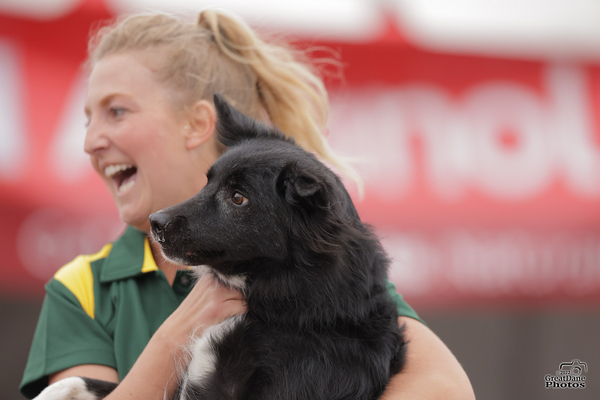
Kaitlyn Rohr
Photos courtesy of GreatDanePhotos.com.