Every Run Is Feedback
Review Your Runs and Learn
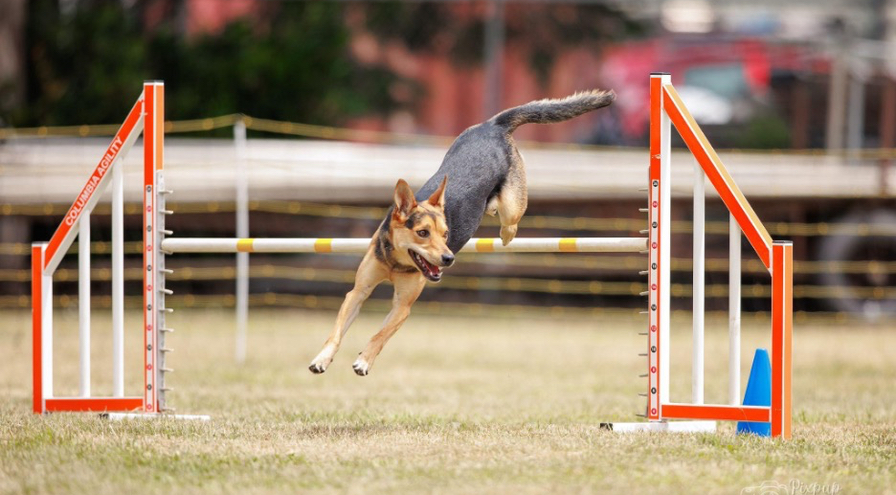
How often do we finish a training session and there was one piece of the training course that our dogs just couldn't manage through? Or our dog took an off course, refused a jump or simply wasn't turning the same way at a trial? We come off the course and say "why did that bar come down" or like me "what a jerk taking that off course!". (Photo courtesy of Sarah Forde PixPup Photography!)
Ugh, it's the worst habit to blame the dog, when we don't review our videos for the feedback. 95% of the time, it's me. My hand flicked, I took a wrong step, didn't support enough, etc. etc. Once I realized this, I started recording every. single. session. I review all my training sessions with my dogs, and then at trials, every run is handled the same.
What do you glean from reviewing each run?
- Early take off
- Injuries
- Wrong type of cross and setting a bad line
- Inconsistencies transferring from training to trial environment
- Over/Under stimulation
I strongly believe that I learn more from the video feedback versus my training partners watching and giving feedback. We as handlers know our dogs better than anyone, and it is a disservice by not reviewing our training and trials, because how can we hold such high standards to our dogs, when we ourselves don't hold ourselves just as accountable?
So how do you actually do this without it turning into a chore you dread? Here's how I break it down.
Watch it once, all the way through, no pausing. Just like you ran it. Get your gut reaction out of the way first, because you're going to have one, and it's usually wrong. "He blew me off at the weave poles" turns into "oh, I was still yelling his name from two obstacles back" pretty fast once you actually look.
Then watch it again with a notepad. This time I'm hunting for one specific thing. Not "how'd the run go," but "where were my feet when he took off wrong." If I try to catch everything at once I catch nothing. Pick a question, rewind as many times as you need, write down what you actually see, not what you think happened.
Training video and trial video get watched differently. In training, I'm looking for the mechanical stuff, because that's what training is for: my shoulders turning too late, a verbal that landed half a step behind where it needed to, my line setting my dog up to fail before he even got to the obstacle that "failed." At a trial, I'm watching all of that plus the extra layer trials bring: was he already amped up at the start line, did he glance at the crowd, did my own nerves change my footwork without me noticing. A miss at a trial and the same miss in the backyard usually aren't the same problem, and the video is the only way to tell them apart.
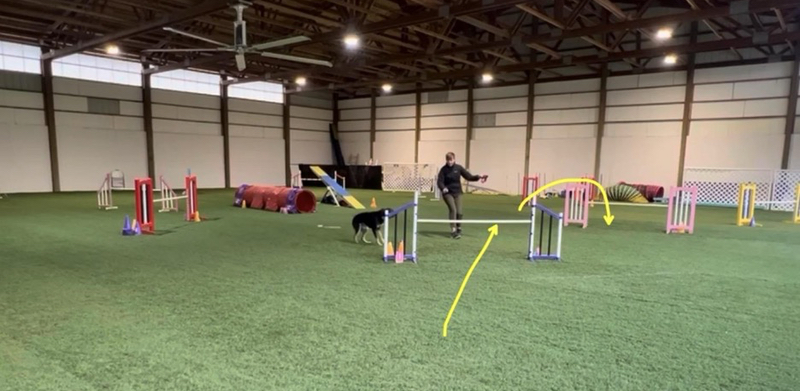
Write the pattern down, not just the run. One bad rear cross on one Tuesday doesn't mean much. The same bad rear cross showing up three sessions in a row means I've found something actually worth fixing. I keep a running note of what I'm seeing across sessions, not just after each one, because that's where the real pattern shows up.
Bring the clip, not the story, to your trainer. I used to walk in and describe the run from memory, and half the time I'd describe it wrong without meaning to. Now I just show them the ten seconds that mattered. It's a lot easier for a trainer to build you a drill off something they watched than something you're re-telling secondhand, and adrenaline lies to you more than you'd think.
Then go build the rep. Found the issue? Don't just "be aware of it" next time and hope. Set up two or three short sequences that specifically put you in that exact situation again, on purpose, so you can actually practice the fix instead of just noticing the problem over and over.
And go film that too. That's the whole loop: you see it, you name it, you drill it, you check it again on video to see if it actually changed. Otherwise you're just guessing that the work is helping.
At the end of the day it comes back to the same thing. We hold our dogs to a pretty high standard out there. The least we can do is hold the camera up and hold ourselves to the same one.
About Kari:
Kari’s agility journey began in 2011 with her older Weimaraner and grew into a competitive career that later included her driven Doberman and now her Working Kelpies, Aegon, Stellar, and Syl, who is now retired. Based in Bend, Oregon, she continues to train and compete while coaching agility teams locally and working with clients across the United States.