How Do You Manage Nerves?
The Butterflies Never Go Away
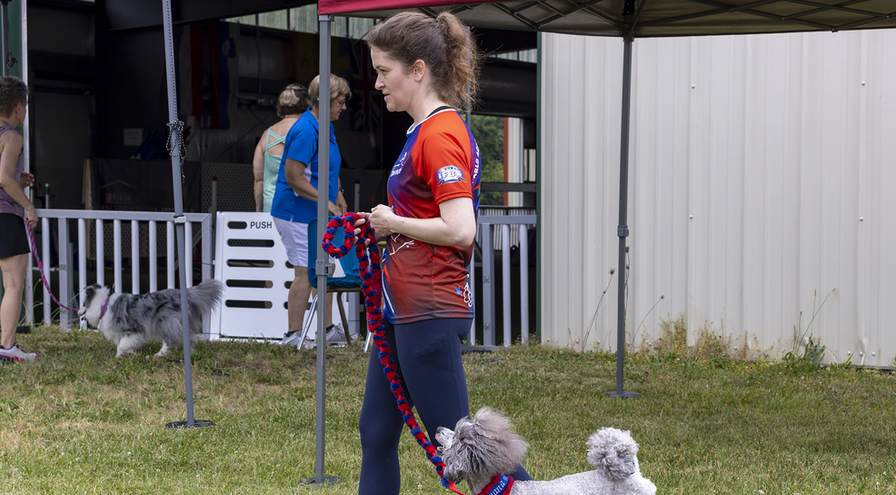
I still remember the butterflies I felt as a young girl waiting to enter the show ring with my quarter horse. At the time, I assumed those nerves would eventually disappear. Surely experienced competitors didn't feel that way, right?
Seven years into my agility journey, with three appearances on Team USA and an Individual Gamblers Silver Medal at the 2026 IFCS World Agility Championships, I can confidently say they never went away.
No matter how many years I've competed or how big or small the event is, the butterflies still find me. I've felt them before local trials, national events, and world championship runs alike.
What I've learned is that success isn't about eliminating nerves. It's about learning what to do with them.
Nerves Mean You Care
Many competitors spend a lot of time trying to calm themselves down. They worry that feeling nervous means they're not confident, prepared, or mentally tough enough. I look at it differently.
For me, nerves are evidence that I care. I care about my dog. I care about our training. I care about performing to the best of our ability.
That nervous energy is simply my body preparing for something important. Rather than fighting it, I've learned to channel it into determination and focus.
Preparation Builds Confidence
One of the biggest ways I manage my nerves is through preparation. I've learned that I feel far more anxious when I'm rushed, so I intentionally build extra time into my schedule. I like arriving early enough that I can comfortably walk Havana, let her settle in, take care of any last-minute details, and still have time to review the course before the walkthrough begins.
Even at this stage of my agility career, I like looking at the course map before I ever step onto the field. I know some handlers who find that stressful and prefer to see the course for the first time during the walkthrough. That's perfectly okay. One of the most important lessons I've learned is that mental preparation isn't one-size-fits-all. What calms one competitor may increase another competitor's stress. The key is finding what works for you.
For games classes, I often take that preparation a step further. I'll wake up extra early and spend time thinking through possible strategies and options before I ever arrive at the ring. I consider different approaches, where I might adjust my plan based on how it looks in person, and what risks may or may not be worth taking. The more scenarios I've considered beforehand, the more confident I feel when it's time to make decisions under pressure.
Having a plan doesn't eliminate my nerves, but it gives me something productive to focus on instead of worrying about what might happen.
Mental and Physical Readiness
When I'm especially nervous, I also rely on a few simple techniques to help settle my mind. One of the most effective is taking several deep breaths, holding them briefly, and then slowly exhaling. It's similar to box breathing, and it helps interrupt the cycle of anxious thoughts while bringing my focus back to the present moment.
As my run time gets closer, I also start mentally rehearsing my plan. I'll quietly go through my verbals in my head and visualize exactly where Havana will be when I give each cue. I picture the lines, the timing, and the connection between us. By the time we're waiting at the gate, I've often run the course several times in my mind.
That visualization doesn't guarantee a perfect run, but it helps me feel prepared and confident when it's finally our turn.
Another lesson I've learned the hard way is that physical preparation matters just as much as mental preparation. For years, I often wouldn't eat during trial days. Between nerves, food allergies, and a sensitive stomach, skipping meals seemed easier than forcing myself to eat. Unfortunately, that approach eventually caught up with me. By the end of long trial days, my verbal timing wasn't as sharp, my reactions slowed down, and I wasn't giving Havana the information she deserved.
Now I make a conscious effort to fuel my body throughout the day. I pack intentional snacks and even set alarms to remind myself to eat and drink. Coconut water has become one of my favorite trial-day staples, and I almost always have nuts, beef jerky, or other easy snacks nearby.
It's not the most exciting piece of agility advice you'll ever hear, but sometimes success isn't about finding a new handling technique. Sometimes it's simply remembering to take care of yourself.
When It's Time to Run
The butterflies still show up before big runs. My heart still races. I still feel the anticipation.
But something interesting happens when I step to the line.
The noise fades away. The distractions disappear. The entire world seems to come back into focus.
All of the preparation is done. The planning is behind me. There is nothing left to analyze and no more decisions to make. It's time to trust my dog, trust my training, and be present in the moment.
That's when the nerves stop feeling like fear and start feeling like fuel.
Choosing What Nerves Mean
Over the years, I've learned something important: nervous energy and determination often feel remarkably similar. Both make your heart race. Both sharpen your focus. Both remind you that something important is about to happen.
The difference is how you choose to interpret them.
Every time I walk to the line, I have a choice. I can let my nerves convince me to be afraid of failing, or I can use that same energy to fight for the run I want.
I'll take the second option every time.