Learning from Non-Q Runs
The Most Valuable Runs Don't Always Qualify
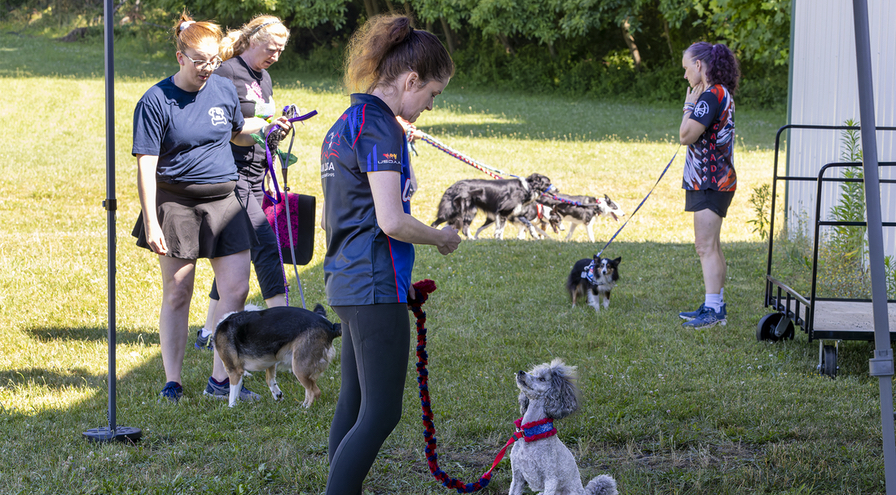
Nobody enters the ring hoping for an NQ.
We all want the clean run, the ribbon, and the qualifying score. But some of the most valuable lessons I've learned in agility have come from runs that didn't qualify.
The first thing I tell people who are serious about improving is simple: record your runs.
Even experienced handlers don't always know exactly what happened in the moment. It's easy to walk out of the ring convinced your dog made a mistake. Then you watch the video and realize you were late with a cue, pulled your dog off a line, or gave information that was different from what you thought.
Without video, you're often guessing.
When I review a run, I like to watch the problem area in slow motion and try to picture exactly what the dog was seeing when they made their decision. I pay attention to handler motion, timing, position, and verbals. Often you learn or confirm something you may not have realized while running.
If you're hesitant to ask someone to video your runs, buy an inexpensive tripod and set up your phone near the ring. The footage doesn't need to be perfect. Something is better than nothing.
Once I've reviewed the run, I try to find something positive.
Maybe Havana gave me an amazing start-line stay. Maybe her contacts were the best they've ever been. Maybe she nailed a difficult weave entry. There is almost always something worth celebrating.
And when there isn't? I remind myself that our dogs are out there running around and jumping plastic because they love spending time with us. In the grand scheme of things, an NQ isn't the end of the world.
That's probably why I usually come off the course laughing when something goes wrong. Not because I'm happy about the mistake, but because dwelling on it doesn't help me fix it.
What helps is turning frustration into a training plan.
Many of my best training sessions started with a mistake that happened at a trial. I'll recreate the sequence, work through the problem, or ask my instructor to build something similar in class.
Sometimes a NQ also reveals how your dog responds to a particular course challenge. Maybe you've never seen a dogwalk approached from that angle, a wrap presented from that line, or a discrimination set up in that way. Trials often expose training gaps you didn't know existed because the challenge simply hadn't shown up in practice yet.
I also pay attention to patterns. One mistake may simply be a mistake. But if the same issue keeps appearing, it tells me I’ve identified a training gap. This helps me prioritize what we need to work on instead of guessing where to spend our training time.
A non-qualifying run isn't a verdict. It's information.
Qualifying runs tell us what we're doing well. Non-qualifying runs tell us what we need to work on next.
Both have value.
The next time you leave the ring disappointed, review the video, find something worth celebrating, identify one thing you can improve, and get back to work!
Your next breakthrough might be hiding inside your last NQ.