Training Tuesday: Is "Time" Related to Progress?
Time spent on training is not always a reliable predictor of success.
Originally published on Megan Foster's Synergy Dog Sports blog. Used here with permission.
Time as a predictor of success
Time spent at a training project isn’t in direct correlation with progress. I hear it from clients all of the time: “I’ve been doing this since he was a puppy; he should know this!” or, “I’ve been doing this for many months; he should know this by now!” — or something to that affect.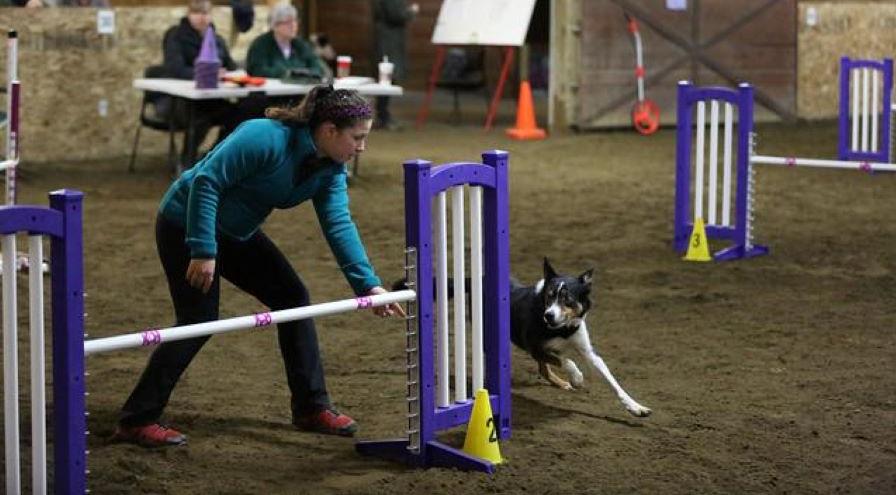
My clients are not wrong. Their dog probably should understand the concept or behavior if they have been working on it for most of the dog’s life.
However, time put into a training project is not a reliable predictor of success. Training technique and execution of said technique is what we should be looking at.
Technique and execution
If you set out with a training plan, you should be able to increase criteria within one or two training sessions. If you go out to do the exact same training session a third time, start to question your plan.
If you do the exact same session too many times in a row, the dog will struggle more when you do finally increase criteria. When you have a large reinforcement history for a behavior, it is more difficult to change. This usually plays to our advantage! However, if you are spending too long at the first step of a 10-step training project, your might experience frustration when trying to move on to step 2.
If you can’t increase criteria because you feel you have too many errors, your criteria was too high to begin with. If something isn’t working, take another look and see if you can split the behavior down again so that success is easily achievable.
Sessions should be split so finely that you can change one tiny detail every one or two sessions, so that when you put “x” amount of time into a project, you see progress.
Sometimes, the training technique just isn’t going to work our for you and your dog — even if it worked well for your previous dogs and even if it worked well for all of your classmates. And that’s ok! If something isn’t working out, take a step back, ask for help, and try to come up with a new training plan!
Sometimes, it is execution of the technique. We are all human, and we make mistakes. There is a lot to be said for good mechanics. If you are marking a behavior a little late, or a little early, it can really cause some behaviors to never progress. If your reward delivery isn’t ideal for the behavior, that can throw a wrench at things too. So, when reviewing your videos, make sure you’re taking a look at your mechanics.
Progress as a benchmark of success
Now, back to time. Do I think we should be patient and give ourselves and our dogs time to learn the behavior? Yes, absolutely! Time, however, is not what I rely on as benchmarks for success. I want to see progress in every single training session. I want to see that my dog is learning in every single training session.
Give yourself and your dog a reasonable amount of time at learning a behavior, and review your videos/notes: is progress being made?
If yes, great — keep on going.
If no, stop and think about how you can see progress again.
About Megan Foster
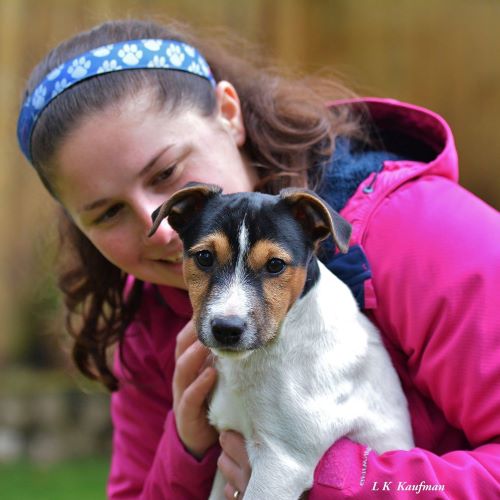 Megan Foster has been involved in the dog sport world nearly her entire life. With over 20 years’ experience, she has competed with a variety of dogs, including an American Eskimo and West Highland White Terrier, Shelties, border collies, and Parson Russell Terriers, and has worked with an even larger variety of breeds. Her accomplishments include many ADCh (USDAA Agility Dog Champion) titles, MACh (AKC Master Agility Champion) titles, Regional and National Championships, and representing the U.S. on the European Open in 2015. Megan was also a USDAA judge for over 10 years, providing valuable insight into course design, course analysis, and handling styles throughout the United States. Megan has been teaching agility full-time, in person and online, for six years, through her training school, Synergy Dog Sports. Megan became a OneMind Dogs Assistant Coach in 2016 and finished her Coach Certification in 2018. She believes in developing a system of communication based on the dog’s perspective and what dogs naturally understand and then individualizing that system for the humans that train and run them. Megan currently has three dogs of her own: Smack (border collie), Shock (border collie), and Shrek (Parson Russell Terrier); she lives with her partner, Graham, and his dogs, Skittles (Sheltie) and Skrik (border collie) in Stanwood, Wash. For more information, visit www.synergydogsports.com.